

Key Takeaways
- Franchise marketing aligns corporate branding with local marketing efforts for scalable success.
- Essential strategies include understanding your target audience, leveraging social media, and optimizing local SEO.
- Freitag Marketing has a proven track record of driving results for franchises, including Cape Cod Mosquito Squad.
- A solid franchise marketing strategy boosts brand visibility, sales, and franchisee satisfaction.

What is Franchise Marketing and Why Does It Matter?
Franchise marketing refers to the strategies used by franchisors and franchisees to promote the brand, attract customers, and drive sales. It balances corporate-level campaigns with localized efforts tailored to individual franchise markets.
Franchise marketing matters because it:
✔️ Builds a consistent brand image across all locations.
✔️ Drives foot traffic and online sales.
✔️ Supports franchisees in achieving success, ensuring the franchise as a whole thrives.
Common Challenges Franchises Face (and How to Overcome Them)
| Challenge | How to Overcome It |
|---|---|
| Competing with other local businesses | Focus on hyper-local strategies and unique value propositions tailored to your area. |
| Limited resources for marketing | Prioritize cost-effective tactics like local SEO and social ads. |
| Adhering to brand guidelines locally | Adapt materials provided by the franchisor to align with the local audience. |
| Building customer loyalty | Offer personalized experiences and engage with the community directly. |
| Generating enough local leads | Utilize targeted digital ads, local events, and referral programs. |
| Managing online reviews | Respond to all reviews promptly and implement strategies to encourage positive ones. |
| Lack of marketing training | Request support and resources from the franchisor or attend local marketing workshops. |
| Keeping up with marketing trends | Follow industry updates and experiment with scalable strategies provided by the brand. |
7 Keys to Creating a Franchise Marketing Strategy
1. Identify Your Target Market and Objectives
The core of any marketing strategy is comprehending your audience and setting clear objectives.
When defining your target market, ask yourself the following questions: What age group does your product appeal to? Is there a specific gender that you should focus on? What income bracket can afford your offerings? These details help in building focused and efficient marketing campaigns.
For instance, if you’re running a children’s education franchise, you might want to target parents aged 25-40 with young kids. This demographic information will determine everything from the language used in your marketing materials to the channels through which you promote your business.
Establishing precise marketing objectives involves determining what you want to achieve and how you’ll measure success. Your goals could be increasing brand awareness by a certain percentage within a specified time frame, boosting franchisee units by a specific number, or enhancing customer engagement.
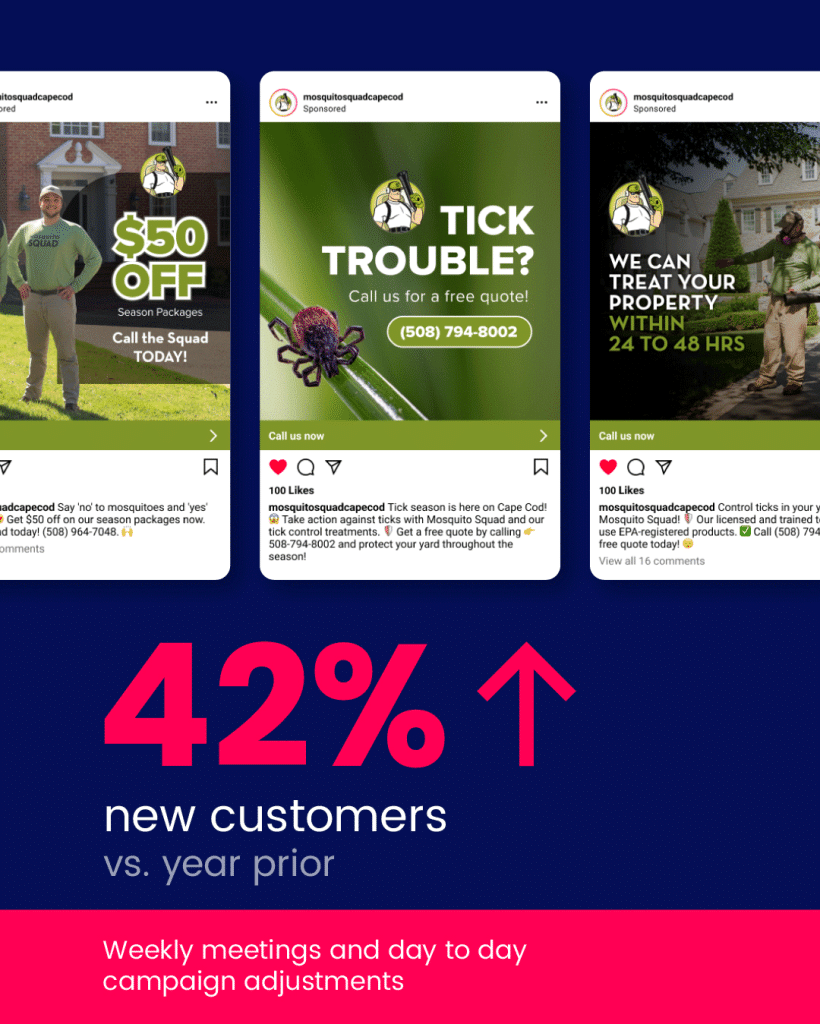
We have a real example of our own: our agency, Freitag Marketing, made Cape Cod Mosquito Squad campaigns that targeted homeowners seeking seasonal pest control services, driving higher engagement and conversions.

2. Research Customer Needs and Preferences
One size does not fit all. Each location has its own customer base with unique preferences and needs. It’s essential to conduct thorough research to understand what drives customer behavior and decision-making.
- Conducting surveys is an effective way to gather insights from your target audience directly. Online tools like SurveyMonkey allow you to create customized surveys that collect valuable data on customer preferences, needs, and pain points.
- Analyzing online behavior is a goldmine for understanding customer interactions. Utilizing tools such as Google Analytics and social media insights provides invaluable data on customers’ online engagement with your brand.
- Hosting focus groups can provide deep, qualitative insights into customer expectations and perceptions. By organizing sessions where customers can express their opinions in a group setting, you gain qualitative data that goes beyond mere numbers.
Consider a real-world example where a restaurant franchise partnered with our agency to refine their menu offerings based on extensive research into customer preferences. The result was remarkable – a 20% increase in customer satisfaction.
3. Craft a Communication Plan
Let’s break down the key components of crafting a comprehensive communication plan for your franchise.
Step I: Develop a Messaging Calendar
This takes the guesswork out of when and how often your communications will go out. It can include everything from social media posts to email newsletters and blog updates. By planning your messaging in advance, you can maintain a consistent presence across all channels and ensure that you’re reaching your audience at the right times.
Step II: Consistent Brand Voice
In the age of social media and digital marketing, establishing a consistent brand voice is crucial for creating brand recognition and loyalty. A consistent brand voice sets expectations for your audience and builds trust in your franchise.
Step III: Multi-Channel Integration
Whether it’s coordinating messages across social media, email, or print, multi-channel integration ensures that your audience receives a cohesive brand experience no matter where they engage with your franchise.
For instance, a retail franchise may coordinate its brand promotion across social media platforms by sharing the same message tailored to each platform’s unique audience. This integration reinforces brand identity while catering to the specific preferences of each audience segment.

4. Leveraging Social Media and Advertising
Leveraging social media and advertising can significantly impact a franchisor’s brand visibility.
Step I: Choose Relevant Platforms
It’s important to focus on the platforms where your target audience is most active. For instance, if your franchise caters to an older demographic, platforms like Facebook or LinkedIn may yield better results. Conversely, if your target audience skews younger, Instagram or TikTok might be the key platforms for engagement.
Step II: Create Engaging Content
Local social media marketing is key. Effective content creation goes beyond merely promoting products or services. It’s about telling a story that connects with your audience on a personal level. Sharing success stories from existing franchisees, behind-the-scenes glimpses into your franchise operations, valuable industry insights, and locally relevant information can make for engaging content that builds brand affinity.
Step III: Use Paid Advertising
Paid advertising enables precise targeting which can result in higher quality leads for potential franchisees. Additionally, remarketing strategies can help nurture leads through the decision-making process, ultimately driving conversions.
Our social media campaigns have proven successful for our clients, with measurable growth including up to a 40% increase in online engagement. These statistics demonstrate the tangible impact that strategic social media and advertising initiatives can have on franchise marketing efforts.

5. Boosting Sales and Brand Visibility
Step I: Offer Promotions and Discounts
Limited-time offers create a sense of urgency, compelling potential customers to make a purchase sooner rather than later. These promotions can be advertised through various channels, such as social media, email marketing, or even partnerships with local businesses.
Step II: Utilize Local SEO Strategies
Optimizing your online presence through search engine optimization (SEO) is crucial for increasing brand visibility and attracting organic traffic. By strategically incorporating relevant keywords into website content and metadata, franchise businesses can improve their ranking in search engine results pages.
Here’s an example of what a local SEO agency could do for you: we managed to increase one of our pest control client’s organic traffic by 25% within 2 months! Our efforts achieved first-page rankings for multiple targeted keywords related to pest control services.
Step III: Implement Customer Referral Programs
By incentivizing loyal customers to refer friends and family through referral programs, franchise businesses can tap into an extensive network of potential customers. Offering rewards or discounts for successful referrals not only encourages customer advocacy but also fosters a sense of loyalty while expanding the customer base.
6. Tailoring Tactics for Franchisees
The key to successful marketing for franchises lies in tailoring tactics to meet the needs and capitalize on the strengths of each unique location.
Step I: Provide Customizable Marketing Kits
By offering customizable marketing kits, franchisees gain access to a range of templates, graphics, and tools that they can adapt to fit their specific local market.
Step II: Host Training Webinars
Hosting interactive webinars that focus on local marketing strategies, digital tools, and customer engagement can equip franchisees with the knowledge and skills they need to thrive in their respective markets.
Step III: Regular Feedback Sessions
At Freitag Marketing, our feedback sessions have successfully empowered franchisees to effectively market their locations, resulting in a more unified brand presence. Through our weekly or bi-weekly feedback sessions, we enable franchisees to leverage local insights while maintaining brand consistency.
7. Competitive Analysis and Insights
Step I: Identify Key Competitors
Direct competitors offer the same products or services, while indirect competitors may fulfill similar customer needs in different ways. For example, if you run a coffee shop franchise, Starbucks and Dunkin’ would be your direct competitors. On the other hand, a local tea house might be considered an indirect competitor since they cater to a similar demographic with different offerings.
Step II: SWOT Analysis
Performing a SWOT analysis (Strengths, Weaknesses, Opportunities, and Threats) for each of your key competitors allows you to comprehend their positioning in the market. By understanding what they excel at and where they fall short, you can gain valuable insights into how your franchise can differentiate itself.
Step III: Benchmark Performance
Comparing your franchise’s performance against that of your competitors is crucial for identifying gaps and areas for development.
Franchise Marketing Examples: Our Success Cases
Cape Cod Mosquito Squad
Freitag Marketing partnered with Cape Cod Mosquito Squad to develop a franchise-focused marketing plan. By leveraging paid media services, local SEO, and social media campaigns, we helped them:
- Gain 42% more new customers year over year.
- Expand their reach to targeted audiences.
- Become the #1 mosquito and tick control service provider in the Cape Cod area.
Ready to Take Your Franchise Marketing to the Next Level?
Freitag Marketing specializes in helping franchises grow through tailored digital marketing strategies. Whether it’s social media, local SEO, or paid advertising, our franchise marketing agency is here to help. Let’s build your franchise’s success together!
Schedule a FREE digital marketing consultation.

FAQs
What is the best type of franchise marketing?
The best approach combines corporate branding with localized strategies, leveraging tools like social media, SEO, and email marketing for maximum impact.
Who pays for marketing in a franchise?
Typically, marketing costs are shared between the franchisor and franchisees. Franchisors often cover national campaigns, while franchisees focus on local marketing efforts.
How do I create a marketing plan for my franchise?
Start by identifying your target audience, setting clear objectives, and developing a communication strategy. Incorporate local SEO, social media, and paid ads for comprehensive coverage.
Do franchises do their own marketing?
While franchisors handle overarching branding, franchisees are often responsible for local marketing, supported by tools and guidance from the franchisor.
What is an example of a franchise strategy?
A successful example is Cape Cod Mosquito Squad’s targeted digital campaigns, which combined local SEO, paid ads, and social media campaigns to drive significant results.