
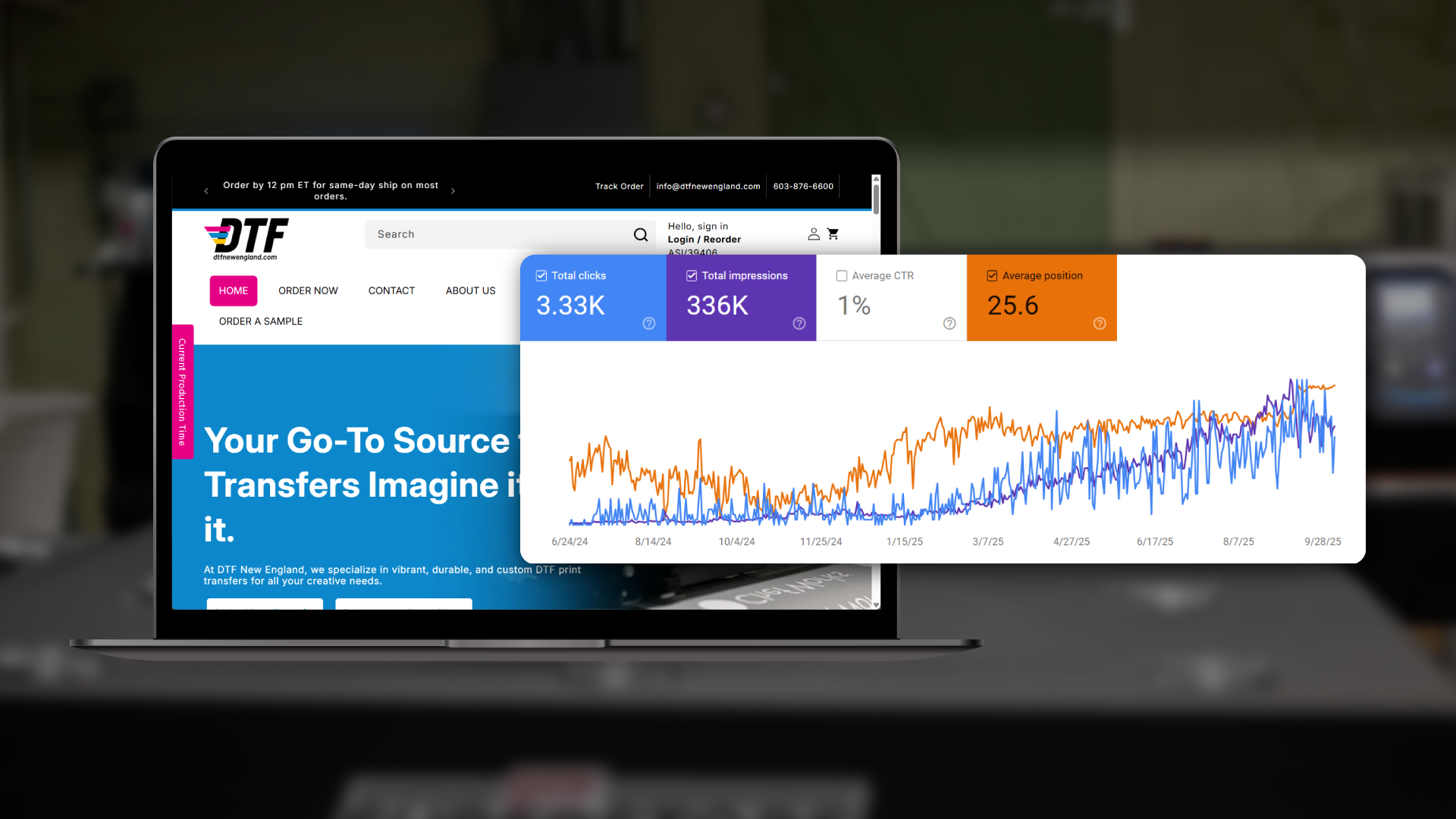
New Hampshire SEO isn’t about chasing massive traffic numbers or competing on national terms; it’s about being visible at the exact moment a local buyer is ready to act. In smaller, high-intent markets, search performance is measured by calls, booked appointments, and real conversations, not vanity metrics.
The most effective SEO strategies in New Hampshire focus on trust, proximity, and relevance at the town level, turning limited search volume into consistent, qualified demand. When done correctly, local SEO becomes one of the most reliable growth channels for NH businesses.
The Reality of Search Competition in New Hampshire
Search competition in New Hampshire behaves differently than in larger metropolitan markets. While overall volume is lower, intent is significantly higher, and rankings are more stable and more decisive. In many industries, the businesses that dominate local results capture the vast majority of available demand.
This reality means that New Hampshire SEO rewards precision over scale. Winning doesn’t require ranking everywhere; it requires ranking in the right places, for the right searches, with the right credibility signals in place.
Smaller Markets, Higher Intent
Search behavior in New Hampshire closely mirrors real-world buying decisions. Most users aren’t casually browsing; they’re searching because they need a solution soon. This shifts SEO away from traffic acquisition toward conversion-readiness and trust-building.
In many NH towns, monthly search volume for a core service may appear modest on paper. However, those searches typically come from users who are:
- Actively comparing providers and looking for help.
- Ready to make contact within days.
- Focused on proximity, availability, and reputation.
For example, a home service business in the Seacoast region may only see a few dozen searches per month for a specific service in a single town. Yet those searchers are often homeowners who already know what they need and are deciding who to hire. In this context, ranking position matters disproportionately. Ranking fifth instead of first can mean missing nearly all viable opportunities.
These patterns consistently appear across New Hampshire SERPs and explain why intent is unusually high when:
- Queries often include a service, town, and timeframe.
- Searches reflect comparison, not early research.
- SERPs are limited, showing the same local providers repeatedly.
- Rankings directly influence calls, form fills, and bookings.
Why Generic SEO Strategies Don’t Work for NH Businesses
Many SEO marketing strategies are built for scale, volume, and broad keyword coverage. In New Hampshire, this approach often dilutes relevance and weakens performance.
Pages designed for national or multi-state audiences fail to align with the town-level intent that dominates local search behavior. While these pages may earn impressions, they often lack the specificity needed to build trust or drive action from potential clients. A page can technically rank and still underperform if it doesn’t reflect local language, proximity cues, or regional context.
In smaller, hyperlocal markets, local SEO strategies in NH consistently outperform broad visibility. Precision beats reach.
Why Local Visibility Matters More Than Broad Traffic
In New Hampshire, SEO success is measured less by how many people see a website and more by who sees it.
Because search volume is concentrated and intent is high, visibility in the right local contexts directly determines lead flow. Strong performance in town-based organic results, Google Map listings, and high-intent service queries often generates more revenue than broader keywords with higher traffic but lower intent.
Broad traffic can create the illusion of growth. Local visibility creates results.

How Local SEO Works in New Hampshire Communities
Local SEO in New Hampshire functions less like a technical checklist and more like a reputation system. Visibility, accuracy, and consistency work together to establish trust; often before a website is even clicked.
In smaller, interconnected communities, search results serve as validation and social proof. Businesses that appear frequently, accurately, and consistently across platforms are perceived as established and dependable.
Why Your Google Business Profile Should be Your Primary Conversion Asset
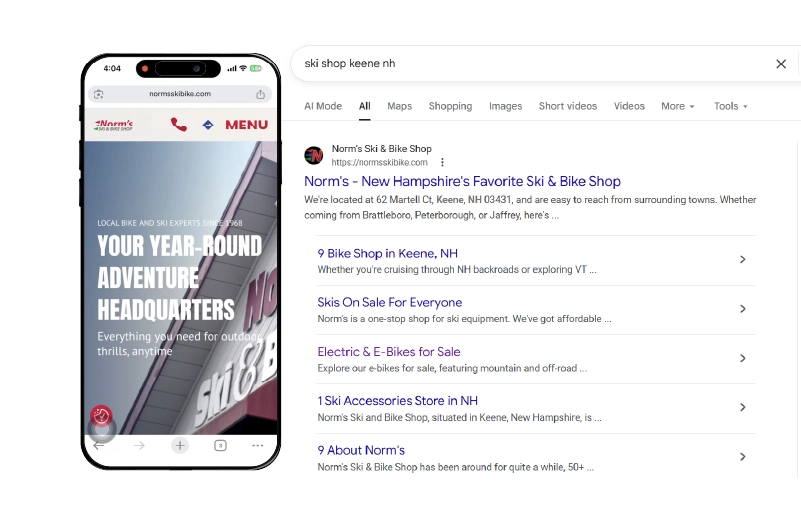
In many New Hampshire markets, a business’s Google Business Profile (GBP) is more influential than a homepage. Because searchers frequently choose who to call directly from map results, without visiting multiple websites. This makes GBP a primary asset for conversion and evaluation.
High-performing profiles typically feature:
- Accurate service areas that reflect real coverage.
- Proper categories aligned with high-intent searches.
- Ongoing engagement through reviews, photos, and updates. Social proof is key.
When optimized correctly, a GBP answers key decision questions immediately, reducing friction and increasing conversions.
Consistency as a Trust Signal in Tight-Knit Markets
This is why consistency matters more than volume. Potential clients often recognize business names across all platforms, and even small discrepancies in addresses, phone numbers, or descriptions can cause disbelief.
From an SEO perspective, consistency helps search engines validate legitimacy. From a buyer’s perspective, it removes hesitation. In New Hampshire, these signals influence both rankings and real-world decisions faster than in larger markets.

Strategic On-Page SEO for NH Businesses
On-page SEO is where local presence turns into local credibility. In New Hampshire, an effective on-page strategy prioritizes clarity and alignment with decision intent rather than keyword volume.
Pages Designed for Local Intent
Pages that perform well in NH do more than describe services; they support evaluation. They quickly answer these frequently searched questions:
- Is this relevant to my location?
- Does this match what I need right now?
- Can I trust this business over others nearby?
Generic pages often fail to convert because they don’t reflect the specificity local users expect.
| Page Focus | Local User Expectation | SEO Outcome |
| Generic service page | General information | Low engagement |
| City-only service page | Local relevance | Moderate conversions |
| Town or region-based service page | Immediate solution | High-intent leads |
Internal Linking That Connects Offerings, Locations, and Credibility
Strong internal linking helps both users and search engines understand how services, locations, and authority connect. For New Hampshire businesses, effective internal structures:
- Reinforces geographic relevance.
- Clarifies relationships between offerings and locations.
- Directs authority toward pages that influence decisions.
Rather than linking at random, strong internal structures guide users to the most relevant next step, reducing friction at key moments of intent.

Content That Builds Authority in New Hampshire Markets
In New Hampshire, content works best as a credibility asset, not a traffic play. High-performing content supports users as they move from interest to evaluation to action, increasing confidence in the business or service.
Educational Content That Reflects Real Customer Questions
The most effective content mirrors the questions customers ask right before making a decision. These questions often relate to:
- Pre-purchase objections or concerns.
- Local regulations, logistics, or environmental conditions.
- Decision criteria unique to New Hampshire buyers.
Addressing these concerns builds trust, reduces friction, and strengthens authority; even when search volume can seem limited.
Local Context is Your Differentiator
Generic SEO content struggles in NH because it lacks situational awareness. Content that reflects regional realities—weather, housing stock, permitting norms, or seasonal timing—feels more relevant and trustworthy from the start, and makes searchers feel like home.
This local context differentiates businesses not only in rankings but in how confidently users choose them, and increases the possibility of mouth-to-mouth recommendations.
How Authority Is Interpreted in Smaller Local Markets
In large metropolitan areas, authority is often measured at scale. In New Hampshire, though, it is measured through familiarity and validation. Both search engines and users look for signs that a business:
- Is established in the local market.
- Is referenced by other known local entities.
- Shows consistent activity and engagement over time.
Because communities are smaller and interconnected, these signals carry more weight and are evaluated more quickly.
Reviews as Both Ranking Signals and Decision Drivers
Reviews play a dual role in New Hampshire SEO. They influence visibility while directly shaping buyer confidence. In smaller markets, quality and specificity often outweigh sheer volume. Reviews that reference real services, locations, and experiences reduce perceived risk and accelerate decisions.
The reviews that tend to have the greatest impact typically show:
- Language and images that reflect real services, products, or experiences.
- Consistency across platforms that users already recognize and trust.
- Credibility from local customers, businesses, or organizations.
In tight-knit markets, reviews serve less as social proof and more as a way to reduce risk, helping users feel confident they are choosing a known and dependable option.
Local Authority Is Earned Through Real Relationships
The strongest authority signals in New Hampshire come from real-world relationships: community involvement, local partnerships, and regional recognition. These signals are difficult to manufacture, which makes them both durable and influential.
The Relative Impact of Local Authority Signals
Not all authority signals carry equal weight in New Hampshire markets. Signals that are rooted in local relevance consistently outperform generic, non-local alternatives.
| Signal Type | Ranking Influence | Buyer Trust |
| Local organization links | High | High |
| Regional business mentions | Medium to high | High |
| Non-local generic links | Low | Low |
Authority that reflects genuine local presence reinforces trust at every stage of the search and decision process, making it one of the most powerful long-term advantages for New Hampshire businesses.
Measuring SEO Success in New Hampshire
SEO success in New Hampshire should be evaluated through business impact, not surface-level metrics. Because intent is concentrated, meaningful measurement connects visibility to leads, conversions, and revenue, not just traffic.
KPIs That Reflect Real Performance
The most useful KPIs include:
- Organic leads by service and location.
- Conversion rates from local pages.
- Visibility for high-intent queries.
These metrics show whether SEO is attracting the right audience.
Why Rankings Alone Do Not Tell the Full Story
Rankings are often overemphasized because they are easy to track, but they rarely tell the complete story in local markets.
A business can improve rankings without increasing inquiries or seeing lead growth, even when positions fluctuate. Without context around intent, location, and conversions, rankings become an incomplete and sometimes misleading indicator of success.
When SEO Becomes a Scalable Growth Channel
SEO finally becomes scalable for local businesses when local relevance, authority, technical consistency, and measurement work together. At that point, gains compound rather than reset, turning SEO into a durable competitive advantage.
Why Partnering With a New Hampshire SEO Agency is a Good Option for You?
New Hampshire SEO is a unique landscape on its own and requires regional understanding, not generic execution. Markets may behave differently, intent is sharper, and trust signals carry more weight.
An effective strategy must reflect those realities, and hiring a local agency to help you shape it can be a great benefit for you and your business.
Common Scenarios Where Expert Support Adds Value
Expert support becomes especially valuable when businesses are expanding into multiple towns, competing with long-established local brands, or needing a predictable flow of leads from organic search.
A Strategic Path Forward
The right SEO partner doesn’t chase rankings; they build systems. Freitag Marketing aligns local intent, authority, and technical performance to create SEO strategies in New Hampshire that drive sustainable, measurable growth.
Rather than short-term wins, the focus is on long-term visibility that converts.
Contact us today, and let’s talk about how we can help your business’s SEO grow.
FAQs
What are the most effective SEO strategies?
The most effective strategies combine local relevance, strong Google Business Profile optimization, authoritative content, consistent citations, and measurable conversion tracking.
What are the 4 pillars of SEO?
Technical SEO, on-page optimization, authority (links and mentions), and user experience, all reinforced by local relevance.
What are common SEO mistakes to avoid?
Chasing broad keywords, ignoring local intent, neglecting Google Business Profile optimization, and measuring success by traffic alone.
How long does it take to see results from local SEO in NH?
Most businesses begin seeing measurable improvements within 3–6 months, with stronger compounding results over time as authority builds. At Freitag Marketing, we can help you build a strategy that fits your needs just right and then walk you through all the outcomes. Let’s talk!